Sample Report · California Residential
Exterior Inspection Report
Wildfire Risk & Exterior Condition Evaluation — This is a sample report using generic property information to illustrate the format and findings you will receive after your inspection.
How to read ratings:
Satisfactory — no action needed
Recommend Attention — follow up with a contractor
Not Observed — not visible or not applicable
1
Roof Surface Condition
Aerial assessment from above — angles inaccessible without a drone
| # | Item Inspected | Rating | Notes |
|---|---|---|---|
| 1.1 | Overall roof surface condition | Recommend Attention | Multiple areas of wear visible on south-facing slope |
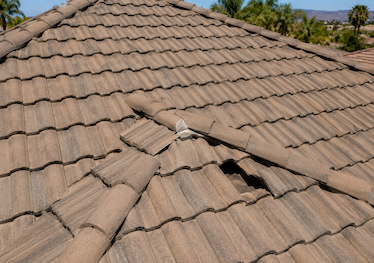
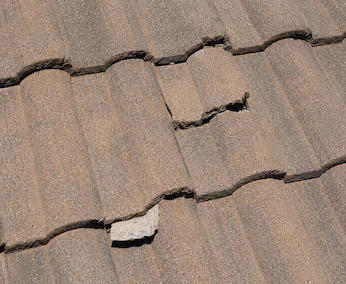
| 1.2 | Missing or damaged shingles / tiles | Recommend Attention | 3 broken tiles identified — see photos below |
| 1.3 | Roof flashing (ridges, valleys, edges) | Satisfactory | Flashing appears intact with no visible lifting |
📷 Evidence Photos — Roof Surface
94% conf.
Broken tile visible on south slope — center section, approximately 3 ft from ridge line.
91% conf.
Two additional damaged tiles on south slope lower section. Granule loss also visible.
2
Gutters & Drainage
| # | Item Inspected | Rating | Notes |
|---|---|---|---|
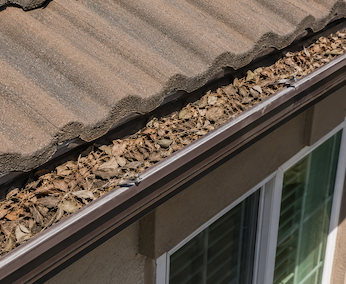
| 2.1 | Visible debris / leaf accumulation in gutters | Recommend Attention | Heavy leaf debris in rear gutters — see photo |
| 2.2 | Downspout condition (visible from aerial) | Satisfactory | All downspouts appear intact and properly connected |
| 2.3 | Gutter guards present | Not Observed | No gutter guards detected |
📷 Evidence Photos — Gutters & Drainage
89% conf.
Leaf debris in rear gutter run — approximately 60% full along north-facing section.
3
Exterior Walls & Foundation
| # | Item Inspected | Rating | Notes |
|---|---|---|---|
| 3.1 | Visible wall cracks or damage | Satisfactory | No significant cracking observed from aerial view |
| 3.2 | Staining, water damage, or discoloration | Satisfactory | Walls appear clean, no visible staining |
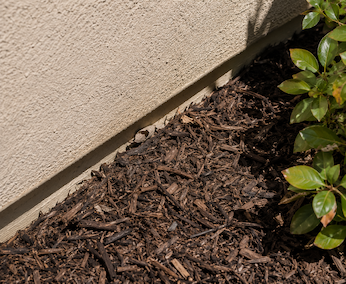
| 3.3 | 6-inch vertical clearance at base of walls | Recommend Attention | Mulch appears to contact siding on east side |
📷 Evidence Photos — Exterior Walls
87% conf.
Mulch bed in contact with siding along east wall — increases moisture, pest, and fire risk.
4
Ember Resistance & Structure Hardening
CA Safer from Wildfires framework · insurer determines discount eligibility
| # | Item Inspected | Rating | Notes |
|---|---|---|---|
| 4.1 | Ember-resistant or fire-rated vents | Not Observed | Unable to confirm vent type from aerial view |
| 4.2 | Enclosed / boxed-in eaves and soffits | Satisfactory | Eaves appear fully enclosed on all visible sides |
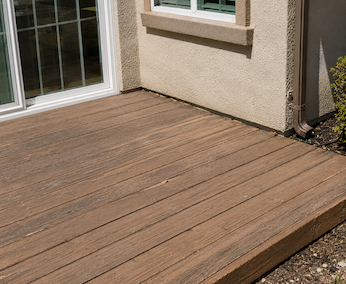
| 4.3 | Non-combustible deck or patio surface | Recommend Attention | Rear deck appears to be wood construction |
| 4.4 | Chimney cap / spark arrestor present | Satisfactory | Metal cap with mesh screen visible |
| 4.5 | Multi-pane or fire-rated windows (aerial visible) | Not Observed | Window type not determinable from aerial |
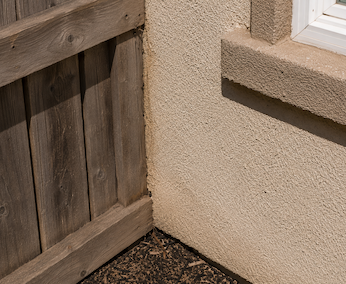
| 4.6 | Non-combustible fencing at structure | Recommend Attention | Wood fence attached to south side of home |
📷 Evidence Photos — Structure Hardening
92% conf.
Wood deck on rear of property — combustible surface directly adjacent to structure.
88% conf.
Wood fence connects directly to south wall — acts as a potential fire wick.
5
Defensible Space
Visual aerial only · does not certify CA PRC §4291 compliance
| # | Zone | Item Inspected | Rating | Notes |
|---|---|---|---|---|
| 5.1 | Zone 0 0–5 ft |
No combustible materials stored against structure | Satisfactory | Zone 0 clear of stored materials |
| 5.2 | Zone 1 0–30 ft |
Vegetation clearance — plants spaced, limbs trimmed | Satisfactory | Good separation between shrubs and structure |
| 5.3 | Zone 2 30–100 ft |
Vegetation management — visible from aerial | Recommend Attention | Dense vegetation on north slope beyond 30 ft — recommend review |
📷 Evidence Photos — Defensible Space
Zone 0 and Zone 1 rated Satisfactory — no photos attached for those items. Zone 2 photo pending site visit confirmation.
6
Drone Media Access
https://media.impartio.net/d/IMP-SAMPLE-CA-001
147Photos
4Videos
Jun 4Expires
7
Summary of Findings
Sections reviewed
5
Items requiring attention
7
Satisfactory items
9
Items requiring your attention
1.1 & 1.2 — Roof surface & broken tiles
3 broken tiles on the south-facing slope. Granule loss visible in the same area. Overall roof surface shows signs of age-related wear.
→ Contact a licensed roofing contractor to assess and repair. Ask about Class A-rated replacement materials for potential insurance savings.
2.1 — Gutter debris accumulation
Rear gutters approximately 60% full with leaf debris — a common ignition point during a wildfire ember event.
→ Schedule gutter cleaning. Consider installing metal gutter guards to reduce future accumulation.
3.3 — Clearance at base of walls
Mulch bed in direct contact with siding on the east wall. Wood-to-soil contact increases moisture, pest, and fire risk.
→ Pull mulch back at least 6 inches from all exterior walls. Replace with gravel or bare soil in that perimeter zone.
4.3 — Combustible deck surface
Rear deck appears to be standard wood construction — combustible and directly adjacent to the structure.
→ Discuss replacement with composite or concrete decking with a licensed contractor. May qualify for a homeowners insurance discount under CA Safer from Wildfires.
4.6 — Combustible fencing at structure
Wood fence attached directly to the south wall acts as a fire wick — it can carry flames from the yard directly to the structure.
→ Replace with metal, masonry, or composite fencing within 5 ft. of the home. This is a recognized mitigation measure under the Safer from Wildfires program.
5.3 — Zone 2 vegetation management
Dense vegetation visible on the north slope in the 30–100 ft. zone. Overgrown Zone 2 vegetation increases fire spread risk.
→ Review and thin vegetation in the 30–100 ft. zone per CA PRC §4291 requirements. Consult your local fire department for guidance.
!
Disclaimers & Scope Limitations
Not a Real Estate Transfer Disclosure — does not satisfy CA Civil Code §1102 et seq. requirements.
Not a Fire Code Compliance Certification — does not certify compliance with CA Public Resources Code §4291 or any local fire code.
Not an engineering or structural evaluation — no structural, mechanical, electrical, or building code compliance assessment is made.
No destructive testing — all observations are aerial and visual only. No materials were tested or physically inspected.
Liability limitation — inspector's total liability shall not exceed the inspection fee paid.
Insurance eligibility — discount eligibility is determined solely by your homeowners insurance carrier. This report does not guarantee any premium reduction.
A
Appendix — Potential Insurance Discount Opportunities
Appendix
Features that may reduce your homeowners insurance premium
The features below — when present — are recognized by California's Safer from Wildfires program and may support a premium reduction. Your insurance carrier makes the final determination.
| Feature | Why It May Help Your Premium |
|---|---|
| Class A Roofing Material | Concrete/clay tile, metal, and fire-rated composition shingles are one of the most impactful factors insurers consider for wildfire risk scoring. |
| Ember-Resistant Vent Covers | Attic and foundation vents with fine mesh or rated covers are a key structure-hardening measure recognized by CA's Safer from Wildfires program. |
| Enclosed Eaves & Boxed Soffits | Fully enclosed eaves eliminate open cavities where embers can land and ignite — specifically cited as a qualifying hardening improvement. |
| Non-Combustible Deck / Patio | Concrete or composite decking reduces ember catch. A documented mitigation measure that many insurers credit toward a lower premium. |
| Chimney Cap & Spark Arrestor | Prevents burning embers from escaping the flue. Low-cost, high-impact, and recognized by most carriers as a qualifying improvement. |
| Metal Gutter Guards | Debris-free gutters reduce ignition risk during an ember event. Non-combustible covers are considered best practice by IBHS. |
| Non-Combustible Fencing at Structure | Metal, masonry, or composite fencing within 5 ft. of the home is a measurable risk-reduction feature that insurers and fire departments both recommend. |
| Fire-Rated Garage Door | Solid-panel steel or solid wood garage doors reduce ember intrusion — a primary hardening measure under the Safer from Wildfires framework. |
| Defensible Space — Zones 1 & 2 | Adequate clearance is one of the most visible and impactful conditions insurers evaluate for wildfire risk scoring and discount programs. |
B
Appendix — Key Resources
CA Dept. of Insurance — Safer from Wildfires
California's insurer-facing wildfire mitigation framework and premium discount program.
CA Office of the State Fire Marshal — Wildfire Mitigation Program
Community preparedness and property-level risk reduction guidance across fire hazard severity zones.
San Diego Fire Hazard Severity Zones
Official City of San Diego map identifying FHSZ designations by parcel — look up your property's fire risk zone.
Ready to get started?
Request your inspection today
FAA-certified drone pilots. Delivered to your inbox within 5 days of the flight.
California — Schedule Inspection →